On Writing – Stephen King #StephenKing #OnWriting

« Se volete fare gli scrittori, ci sono due esercizi fondamentali: leggere molto e scrivere molto. »

Titolo originale On Writing: A Memoir of the Craft
Autore Stephen King
1ª ed. originale 2000
Genere saggio
Sottogenere autobiografia, manuale di scrittura

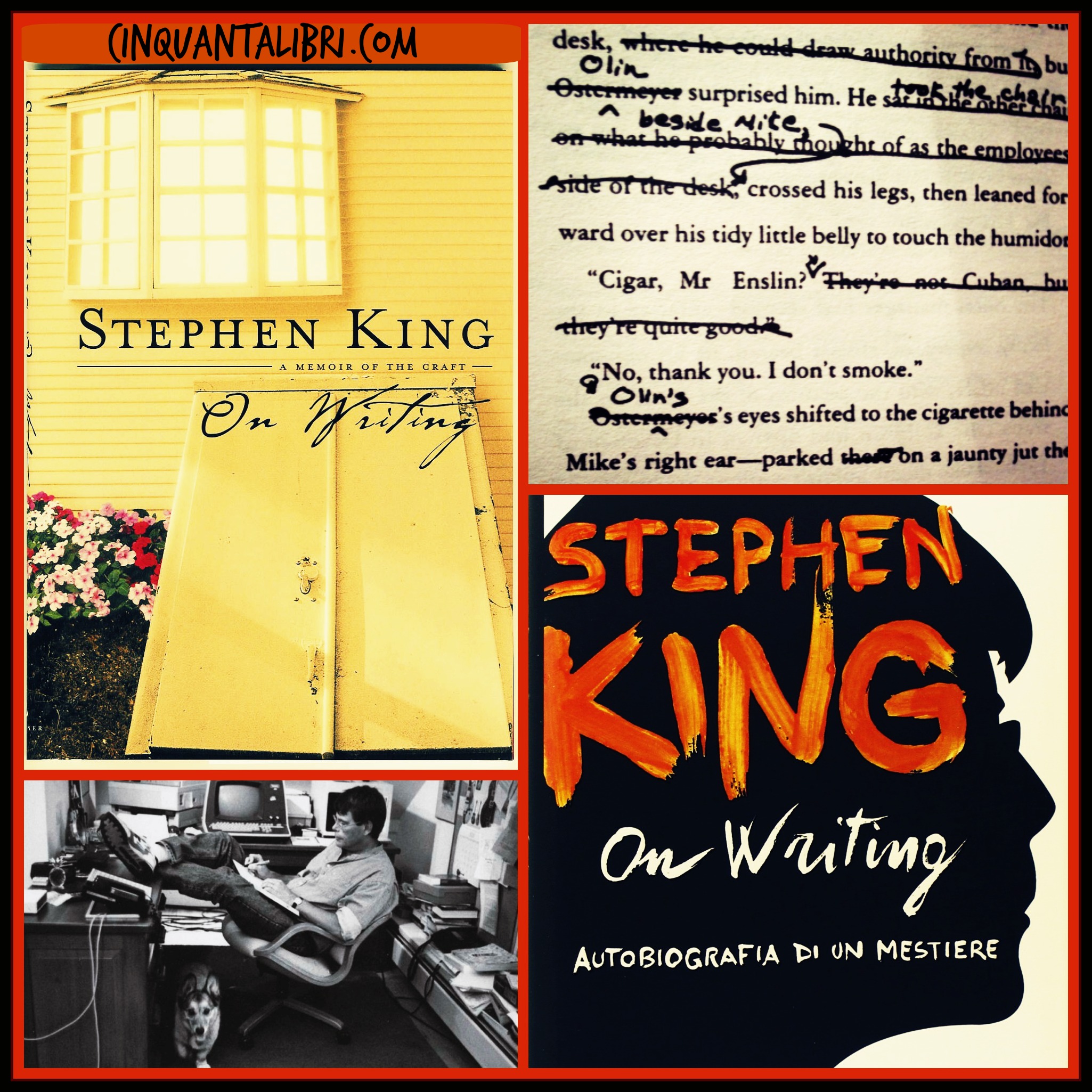
On Writing – Autobiografia di un mestiere– è un saggio/memoir di Stephen King, uscito nel 2000, dove il Maestro lascia il campo preferito del racconto e del romanzo, per realizzare un’opera che parli del suo mestiere: la scrittura, appunto.

E’ una lettura molto scorrevole e poco tecnica, nella quale King racconta il percorso di vita intrapreso intorno allo scrivere, dispensando consigli pratici ma anche umani, e lasciandosi andare a una serie di aneddoti raccontati in modo ironico e avvincente, a disposizione di lettori e aspiranti scrittori. Io l’ho letto quando è uscito, anche se non aspiravo, e recentemente riletto, sempre con molto piacere.

« Questa non è un’autobiografia. È caso mai una specie di curriculum vitae, il mio tentativo di spiegare come si è formato uno scrittore. Non come uno scrittore è stato formato; io non credo che gli scrittori possano ricevere una formazione, né dalle circostanze, né per propria volontà (anche se così ho creduto in passato). L’attrezzatura è compresa nella confezione originale. Ma non stiamo parlando di accessori inusuali; io credo che siano molti ad avere, se pur in forma germinale, talento di scrittore e narratore, e che questo talento possa essere rafforzato e affinato. Se non ne fossi convinto, scrivere un libro come questo sarebbe una perdita di tempo. »

E’ diviso in quattro parti: la prima, gradevole e interessante, è la storia di come King abbia deciso di iniziare a scrivere, da quando ancora in età prescolare scopiazzava le trame dai suoi fumetti preferiti per avere nuove storie da raccontare a sua madre, via via per gli anni delle scuole elementari e medie con vari episodi e incidenti di percorso, per approdare al liceo e all’Università, dividendo la sua passione tra goffi tentativi di scrittura a volte sorprendentemente ben riusciti e l’insegnamento, tra aborti di racconto e principi di giornalismo, fino al primo romanzo, Carrie, che ha un inaspettato successo e lo catapulta nel reame degli scrittori che possono effettivamente, beatamente, campare (e in modo più che dignitoso) scrivendo. Questo lungo momento autobiografico comprende sia ricordi di come la scrittura sia entrata a far parte della sua vita, sia racconti di vita di quello che succedeva a King persona mentre diventava Stephen King lo scrittore, per cui abbiamo l’incontro con la futura moglie, il matrimonio, i figli; e poi la morte della madre, l’alcolismo, la droga, il lungo percorso di riabilitazione, e sempre il lavoro, lavoro, lavoro.

La parte centrale, la più corposa, è il vero e proprio manuale nel quale l’autore cerca di dare, a chi vuole cimentarsi con il mestiere di scrittore, quante più notizie e consigli, reali e utili, per preparare “l’apprendista mago della parola”. Vi sono diversi capitoli (Che cos’è la scrittura, La cassetta degli attrezzi, On writing) in cui il Maestro spiega, anche con esempi pratici ma mai troppo tecnici, come innanzitutto la buona scrittura si basi, sempre e soprattutto, sulla padronanza dei fondamentali (vocabolario, grammatica, elementi di stile), nonchè sul duro lavoro, autodisciplina e un po’ di culo (che lui definisce “aiuti tempestivi”). Poi si esplorano le varie parti della composizione letteraria: narrazione, descrizione e dialogo. E’ una lettura davvero interessante, e penso che chiunque voglia lavorare in questo campo, o semplicemente sia orientato verso uno dei suoi vari aspetti, dovrebbe proprio leggerla e farla sua.

Stephen King è un autore popolare, diciamo pure massicciamente, enormemente famoso. Qualcuno lo snobba proprio perché troppo popolare, e perché di genere, ma senza dubbio lui il mestiere lo conosce a fondo, ed è bravo a parlarne. Soprattutto, è bravo a trasmettere la sua passione per quella che per lui è stata una vocazione, ma che pensa sia una magia aperta a tutti. La sua idea è che il talento sia incluso nella confezione originale, nel senso che è innato e non si può insegnare. Però dice anche che di talento del narratore ce n’è tanto: molte persone lo hanno, più di quello che si creda, non è merce rara e nel momento in cui c’è può essere raffinato, domato e utilizzato. Ovviamente non si entra con poco talento nell’empireo dei Proust e dei Faulkner: ma ci sono tantissimi bravi scrittori che lavorano duro e si divertono onestamente scrivendo, e non si può chiedere molto più di questo, nella vita, ed è questo quello che prova a insegnare King, non a essere uno scrittore di successo, ma a essere uno scrittore onesto, con sè stesso prima di tutto.

« Scrivere non mi ha salvato la vita, ma ha continuato a fare quello che aveva sempre fatto: rendere la mia esistenza un luogo più luminoso e più piacevole.»

“On writing” ormai ha i suoi anni, è uscito nella prima edizione nel 2000 (ma King iniziò a lavorarci alla fine del 1997) per cui alcuni consigli dell’autore che troviamo nei capitoli successivi possono risultare un po’ datati, e di base utili al solo pubblico americano, per esempio come trovarsi un agente, e come farsi notare da qualche rivista letteraria (comunque stiamo parlando solo della fase che precede la pubblicazione). Sicuramente le innovazioni tecnologiche (internet, i social network, la stampa digitale, la morte dei giornali cartacei) che hanno preso piede in questo nuovo millennio hanno mutato radicalmente le metodologie per far conoscere i propri lavori.

I capitoli finali del libro costituiscono un altro momento autobiografico, il racconto del terribile incidente che ha visto Stephen King investito da un furgone mentre faceva una passeggiata nei campi vicino a casa sua. E’ il racconto del dolore e dello shock di trovarsi di fronte alla morte a sessant’anni in un tranquillo pomeriggio di ottobre, il lento recupero, la riabilitazione, la pace e la salute ritrovate grazie anche alla scrittura.

On writing è un bel libro, un saggio che parla di uno scrittore, e del suo amore per la scrittura, e per la lettura. Immancabile e martellante, per tutta l’opera, è il messaggio di King che se si vuol scrivere, si deve leggere; c’è anche un’appendice, alla fine, di 82 titoli di libri da lui particolarmente apprezzati negli ultimi anni. I consigli tecnici sulla scrittura sono ragionevolissimi e tutto sommato pochi; il resto è contesto, amore per l’atto in sè, ed esperienza.

Quindi, scrivere, scrivere, scrivere. E leggere, leggere, leggere.

Tutto il resto è buio.

Stay married, be healthy, and live a good life.

Lorenza Inquisition

Drinking habits

http://shortlist.com/entertainment/books/drinking-habits-of-famous-authors

Drinking Habits Of Famous Authors

To paraphrase Oscar Wilde, drink is the curse of the writing classes.

Few occupations are as synonymous with hard-boozing and 9-5 inebriation as that of the author. And not without reason.

Name a famous author and, chances are, they found themselves emptying a bourbon bottle faster than an ink bottle at one time or another. Some chalking it off to the trappings of fame, others the dreaded curse of writer’s block, and then those who simply loved the sauce.

Here are the literary geniuses who, for better or worse, enjoyed a drink or two…

AND HERE ARE SOME LITERARY DRINKING SPOTS YOU CAN ACTUALLY VISIT

___________________________________________________________

Ian Fleming

007 is more reckless than you might imagine. Yes, he checks into hotels using his own name, making him arguably the least secretive secret agent of all time, and yes, he’s slept with enough women to warrant his own sexual health clinic, but possibly putting him at more peril than a Walther PPK to the back of the head, a 2013 university study of Ian Fleming’s works found that the spy drank on average between 65 and 92 units a week, working out to around four times the recommended limit. This over-consumption was on par with that of his pen-father Fleming – a man also plagued by demons of war, loss and geopolitical secrets, who on occasion polished off a bottle of gin a day. Well, until Fleming’s doctor suggested bourbon was narrowly better for his health. You only live twice, after all.

Drink of choice – Gin Martini

Shaken, not – oh you know the rest…

___________________________________________________________

William Faulkner

“A man shouldn’t fool with booze until he’s fifty, and then he’s a damn fool if he doesn’t,” once counselled William Faulkner, who fooled with the stuff well before his tender years. Keeping a bottle of whiskey within reaching distance was a key part of the author’s writing process (he also claimed he liked to work at night when he’d get some many ideas he wouldn’t remember them all in the morning) with Jack Daniels the usual label of choice. Take a trip to his hometown of Oxford, Mississippi, and you might even spot a bottle of the stuff on his gravestone.

Drink of choice – Mint Julep

Faulkner was partial to a Mint Julep, serving it with whiskey, sugar, ice and some crushed mint, all in a metal cup. The recipe was left at his Rowan Oak estate.

___________________________________________________________

F. Scott Fitzgerald

Just like as his intoxicating description of high-society’s excess left readers breathless, F. Scott Fitzgerald demanded the same of his boozing, favouring gin because he believed it could not be detected on the breath. Gin, among other drinks, provided the lubricant for much of the social antics displayed by he and his prankish wife Zelda (also pictured) during their years together. Fatefully, it was also alcohol that led to the couple’s implosion. Not that they weren’t toxic without booze, with Scott once writing a letter to Zelda saying, “We ruined each other”.

Drink of choice – Gin Rickey

Through the roaring Twenties and massively depressing Thirties there were any number of Rickeys available (scotch, rum, applejack), but gin was the one that endured. Particularly for Fitzgerald, who would’ve taken it with 80ml gin, 2tbsp lime juice, club soda and fat lime garnish in a tall glass.

___________________________________________________________

Stephen King

Beer. Depression. Cocaine. Typewriting. Suicidal musings. The late-seventies and early-eighties must have been one nightmarish smog for Stephen King, relying on his vices to keep the real horror at bay during a period where he it got so bad that he’s since claimed he can’t remember writing Cujo. Textbook alcoholic author, one of King’s biggest anxieties was the prospect of losing his creative spark if sobriety were ever to win out, which of course, following an intervention at the end of the decade, it did, not sullying his fearsome literary output one bit. He later admitted, “I always drank, from when it was legal for me to drink. And there was never a time for me when the goal wasn’t to get as hammered as I could possibly afford to. I never understood social drinking, that’s always seemed to me like kissing your sister.”

Drink of choice – Beer

Beer – his biggest vice of all – was almost always consumed at home. “I didn’t go out and drink in bars, because they were full of assholes like me,” he told The Guardian recently.

___________________________________________________________

Hunter S. Thompson

Never one averse to standing out from the crowd, Thompson liked his drink liked he liked his journalism: strong, in-your-face and not always neat. It was once noted, at his first meeting with a major publisher, that he downed 20 glass of double Wild Turkey then ‘walked out as if he’d been drinking tea’. In fact, Wild Turkey became such a staple for the writer that he even cajoled the brand into Fear And Loathing In Las Vegas among other landmark works.

Drink of choice – Wild Turkey Bourbon and Dry

As we say, Thompson, one of the most famous livewire celebrities to court that famous Kentucky bourbon, didn’t always want it neat. He’d often take his Wild Turkey with ginger beer.

___________________________________________________________

Truman Capote

No one can accuse Truman Capote of failing to mix business with pleasure. The man himself even went so far as to describe his writing process as such: “As the afternoon wears on, I shift from coffee to mint tea to sherry to martinis – I don’t use a typewriter. Not in the beginning. I write my first version in longhand”. Ever the extrovert, when not working, the schmoozer’s social activities tended to revolve around some type of upmarket watering holes like the revolving carousel bar inside New Orlean’s Hotel Monteleone – a favourite.

Drink of choice – Large Vodka and Orange

A screwdriver, essentially, despite the fact he referred to is as his ‘Orange drink’.

___________________________________________________________

Raymond Chandler

“There is no bad whiskey – there are only some whiskeys that aren’t as good as others.” Treating the stuff like a modern day blogger would Red Bull, Raymond Chandler would have been the first to admit that he didn’t control his drink, it controlled him. When he was commissioned to whip up the screenplay for The Blue Dahlia in 1945, he got writer’s block, forcing him to tell his new studio employers that the only way he could finish the script was to do so while blind drunk, which he duly did. The story goes that Paramount honcho John Houseman, who was earlier invited over for a lunch by Chandler (and by lunch we mean a small meal which involved three double martinis, three brandies and a crème de menthe), was the one who found Chandlder passed out at his desk having finished the script, all neatly stacked next to some empty bottles.

Drink of choice – Gimlet

“Half gin and half Rose’s lime juice and nothing else”, as described in Chandler’s 1953 classic The Long Goodbye.

___________________________________________________________

Edgar Allan Poe

Conjuring up excruciatingly grim poetry and bloody literature fit for a Tarantino flick was not the only thing Edgar Allan Poe was partial to. The literary icon also favoured Brandy at a bottle at a time. Having moved to West Point in 1830, Poe’s roommate Thomas Gibson recalled Poe as ‘seldom without a bottle of Benny Haven’s best brandy’ – Benny Haven being Poe’s local watering hole. Couple this with his bizarre taste for Eggnog – yes, that drink vile enough to warrant its own torturous use in The Pit And The Pendulum – and it’s surprising that his most-speculated demise came from rabies, rather than the constant battering he gave his pickled liver.

Drink of choice – Eggnog

Poe’s eggnog was a family specialty. The recipe was passed down through generations and comprised of seven eggs, sugar milk, whipping cream, brandy and nutmeg.

___________________________________________________________

Oscar Wilde

How could we forget old Oscar? The playwright’s charming one-liners on the subject of alcohol were only matched by his love for quaffing it. After reportedly developing a habit for drinking it during a stay in Paris, one of his big loves was absinthe; putting up with its mule-kick aftertaste to reap the rewards of its hallucinatory-like nature. His other love? Fully befitting his stature of a man who had a taste for the finer things in life, it was champagne, even in his darkest hour. Morphine lacking the appropriate effect, he eased the pain of his final few days with a melange of opium, chloral and champagne, causing him to quip the bittersweet line, “And now I am dying beyond my means.”

Drink of choice – Iced Champagne

Served as dry as his wit we’d imagine.

[Images: Rex Features, Wiki Commons, Hunter S. Thompson Archive]